BDSM 101: A Complete Beginner's Guide to Safe and Consensual Bondage
Your journey into the world of consensual power exchange starts with one word: trust.
What is BDSM?
BDSM is an acronym that encompasses a wide spectrum of intimate practices and relationship dynamics:
- Bondage & Discipline: Physical restraint and structured rules
- Dominance & Submission: Power exchange dynamics between consenting partners
- Sadism & Masochism: The giving and receiving of intense sensations
But beyond the acronym, BDSM is fundamentally about conscious, consensual exploration of power, sensation, and trust. It is not about violence. It is not about abuse. It is about two (or more) adults agreeing to explore specific dynamics together, with clear communication and mutual respect.
The most important principle in BDSM is SSC: Safe, Sane, and Consensual. Everything you do should meet these three criteria. If it doesn't, it isn't BDSM—it's something else.
Why People Explore BDSM
The motivations for exploring BDSM are as varied as the people who practice it. Some common reasons:
For the Dominant (the one in control):
- The pleasure of responsibility and caretaking
- Exploring leadership and trust in a contained environment
- The satisfaction of guiding a partner through new experiences
For the Submissive (the one surrendering control):
- The relief of temporarily letting go of decision-making
- Trusting a partner to create a safe space for vulnerability
- The freedom that comes from structured surrender
For both:
- Heightened intimacy through radical honesty about desires
- Exploring sensations and dynamics that vanilla relationships don't typically offer
- Building a deeper form of trust that requires explicit communication
Research by psychologists including Peggy Kleinplatz has shown that long-term BDSM practitioners often report higher relationship satisfaction and better communication skills than the general population—not because BDSM is inherently superior, but because the practice requires explicit negotiation, ongoing consent, and emotional attunement that many relationships never develop.
The Three Pillars: Safety, Sanity, Consent
Safety
Physical safety means understanding the risks of any activity and taking steps to minimize them. This includes:
- Learning proper techniques: Never attempt suspension bondage, impact play, or breath restriction without proper education. Improper techniques can cause serious injury.
- Using appropriate equipment: Quality matters. Cheap restraints can break, causing sudden falls or loss of control. Poorly made impact toys can cause unintended injury.
- Having safety shears nearby: If you use rope or restraints, always have safety shears within arm's reach to cut someone free quickly in an emergency.
- Checking circulation: If someone is restrained, check their extremities regularly for color, warmth, and sensation. Numbness, tingling, or coldness are signs to release immediately.
Emotional safety is equally important. This means:
- Aftercare: Taking time after a scene to reconnect, reassure, and process emotions together
- No judgment: Creating a space where desires can be expressed without shame
- Recognizing triggers: Being aware that past trauma can surface during intense scenes and having plans to handle that
Sanity
This principle reminds us that BDSM should be practiced in a state of clear-minded awareness. This means:
- Not engaging in intense play when intoxicated, emotionally unstable, or sleep-deprived
- Making decisions with a clear head, not in the heat of the moment
- Recognizing your own limits and boundaries
- Understanding the difference between fantasy and reality
Consent
Consent is the foundation of all ethical BDSM. It must be:
- Informed: Everyone involved understands what will happen
- Enthusiastic: Not just "I guess so" but "Yes, I want this"
- Ongoing: Consent can be withdrawn at any time
- Uncoerced: Free from pressure, manipulation, or obligation
Safewords: A safeword is a pre-agreed signal that immediately stops all activity. Common systems:
- Traffic light system:
- "Green" = Everything is good, continue
- "Yellow" = Slow down, adjust, or check in
- "Red" = Stop immediately
- Unique safeword: A word that wouldn't naturally come up in play (e.g., "pineapple," "redwood")
- Non-verbal signals: If someone is gagged or unable to speak, establish hand signals or something they can drop to indicate "stop."
Essential Equipment for Beginners
You don't need expensive equipment to start. Many people begin with items they already have:
Level 1: Household Items (Free - $20)
- Scarves or ties: For light restraint (avoid anything that could tighten unexpectedly)
- Wooden spoons: For light impact sensation
- Blindfolds: Sleep masks work for sensory deprivation
- Ice cubes: For temperature play
Level 2: Purpose-Made Entry-Level Gear ($20 - $60)
- Leather blindfold: Blocks light completely and adds a sense of occasion
- Padded cuffs: More comfortable than rope for beginners, with quick-release clips
- Basic flogger: Soft leather or suede for sensation play (start with light strokes)
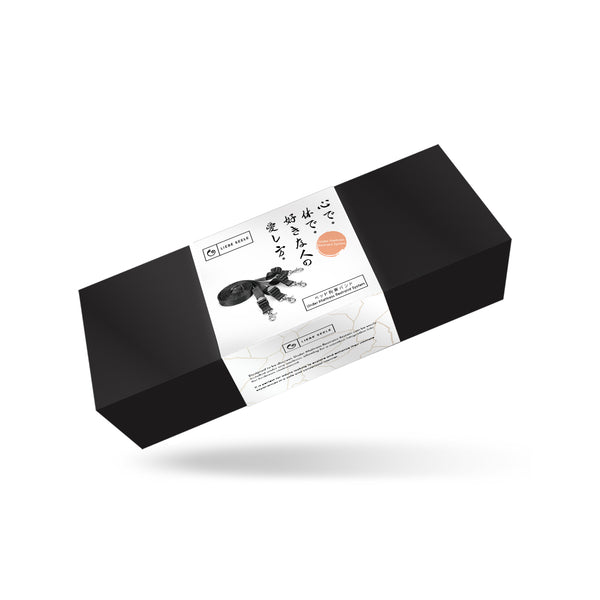
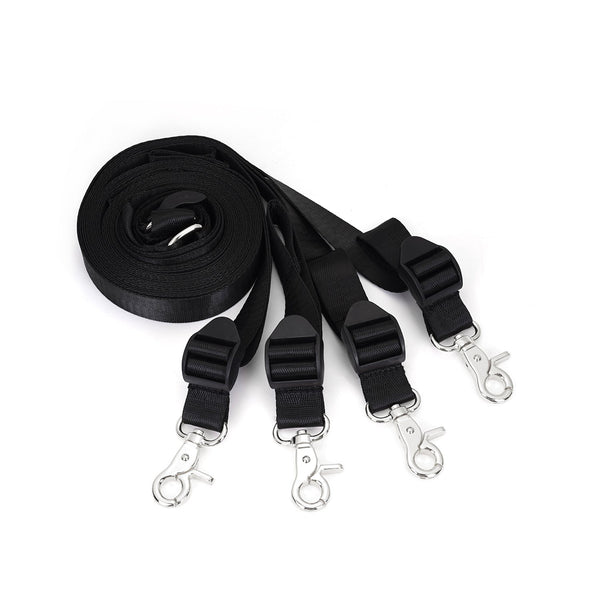
- Under-bed restraint system: Adjustable straps that tuck under the mattress for easy setup
Level 3: Dedicated Collections ($60+)
As you explore, you may want to invest in higher-quality pieces:
- Samurai Collection (Liebe Seele): Thick cowhide leather with copper-plated hardware—designed for durability and aesthetic beauty
- Dark Secret Collection: Elegant black leather with gold hardware for those who appreciate luxury
- Limited Edition Italian Leather: Premium materials for committed practitioners
Why quality matters: Cheap restraints can break at critical moments. Poorly finished edges can cause abrasions. Quality gear is an investment in both safety and experience.
Your First Scene: A Step-by-Step Guide
Before the Scene
1. Have the conversation: Discuss desires, boundaries, and expectations with your partner outside the bedroom. This isn't a mood-killer—it's how you build the trust that makes scenes powerful.
2. Establish safewords: Agree on your signals before any play begins.
3. Prepare your space: Clean, comfortable temperature, good lighting (or intentional dimness), all equipment within reach, safety shears accessible.
4. Set the mood: Music, candles, or whatever helps you both relax and focus on each other.
During the Scene
5. Start slowly: Begin with light sensation or simple restraint. There's no rush.
6. Check in regularly: "How does this feel?" "Do you want more or less?" "Are you okay?"
7. Watch for non-verbal cues: Breathing changes, muscle tension, facial expressions.
8. Stay present: This isn't the time to think about work emails or grocery lists.
After the Scene
9. Aftercare is non-negotiable: After any intense scene, take time to reconnect. This might involve:
- Physical comfort: Blankets, water, gentle touch
- Verbal reassurance: "You did beautifully," "I love exploring with you"
- Emotional processing: Talking about what worked, what didn't, and how you both feel
10. Later reflection: A day or two after, have a conversation about the experience. What would you do again? What would you change?
Common Beginner Questions
Is BDSM abusive?
No—not when practiced correctly. Abuse involves non-consent, manipulation, and harm. BDSM involves enthusiastic consent, clear negotiation, and intentional experiences designed for mutual pleasure and growth.
The key differences:
- Consent: In abuse, consent is violated. In BDSM, consent is continuously negotiated and can be withdrawn.
- Control: In abuse, control is taken. In BDSM, control is given.
- Aftercare: Abuse leaves victims isolated. BDSM includes structured aftercare.
- Growth: Abuse diminishes. Ethical BDSM, when practiced with intention, can deepen trust and communication.
How do I bring this up with my partner?
Honesty is the only way. Choose a non-sexual moment, and consider language like:
"I've been reading about different ways couples explore intimacy, and I came across something that intrigued me. Would you be open to talking about it?"
or
"I trust you deeply, and I'd love to explore some things with you that feel vulnerable to ask about. Is now a good time to talk?"
If your partner isn't interested, that's their right. No pressure, no manipulation. BDSM requires enthusiastic participation from everyone involved.
What if I don't know what I want?
That's completely normal. Many people explore BDSM precisely because they're curious and want to discover what resonates with them. Start with reading, attending workshops (many are offered online), or trying very light activities with a trusted partner.
You don't need to have a fully formed fantasy before you begin. Exploration is the point.
Do I need a "scene name" or a dungeon?
No. Some people enjoy those trappings; others don't. BDSM can happen in your bedroom with no special names or costumes. The essence is the dynamic between you and your partner, not the aesthetics.
That said, if ritual and aesthetics enhance your experience, there's nothing wrong with creating them. Liebe Seele's collections, for instance, are designed for people who find beauty and meaning in well-crafted tools.
What if something goes wrong?
If physical injury occurs, stop immediately and seek appropriate medical care.
If emotional distress arises, stop the scene, provide comfort, and discuss what happened when emotions have settled.
If you're unsure whether something was okay, talk about it. Many experienced practitioners have scenes that don't go as planned—it's how you handle the unexpected that matters.
Safety Guidelines by Activity Type
Restraint & Bondage
- Never leave a restrained person alone
- Check circulation every 5-10 minutes
- Avoid placing restraints around the neck
- Learn proper knot techniques before attempting complex bondage
- Have safety shears accessible at all times
Impact Play (Spanking, Flogging, Paddling)
- Avoid the kidneys, spine, and tailbone
- Start light and build gradually
- Warm up the skin before harder impact
- Watch for bruising and respect your partner's limits
Sensory Deprivation (Blindfolds, Earplugs)
- Check in frequently—losing a sense can intensify both pleasure and anxiety
- Keep the environment safe (no tripping hazards, stable temperature)
- Have non-verbal signals for communication
Temperature Play
- Test temperatures on your own sensitive skin first
- Never apply extreme heat or cold directly for extended periods
- Use barriers (cloth, oil) for temperature transfer
Resources for Continued Learning
Books
- "The New Topping Book" and "The New Bottoming Book" by Dossie Easton and Janet W. Hardy
- "Screw the Roses, Send Me the Thorns" by Philip Miller and Molly Devon
- "SM 101" by Jay Wiseman
Online Communities
- FetLife: A social network for the kink community
- The CSPC (Center for Sex Positive Culture): Educational resources
- Local munches: Non-sexual social gatherings for kinksters to meet and learn
Professional Education
- Many cities have dungeons or community spaces that offer beginner workshops
- Online courses are available through platforms like Kink Academy
Ready to Begin?
BDSM is a journey, not a destination. There's no "right" way to explore—only the way that feels authentic, safe, and fulfilling for you and your partners.
If you're ready to invest in quality gear designed with both safety and aesthetics in mind, explore Liebe Seele's collections:
- Samurai Collection: Japanese-inspired leather bondage with copper-plated hardware
- BDSM Restraints: From beginner cuffs to advanced systems
- Limited Edition: Premium Italian leather in exclusive colors
Frequently Asked Questions
What does BDSM stand for?
BDSM stands for Bondage & Discipline, Dominance & Submission, and Sadism & Masochism. It encompasses a wide range of consensual power exchange dynamics and sensation-focused practices between adults who have explicitly agreed to explore them together.
Is BDSM safe?
Yes, when practiced with proper education, clear communication, and adherence to safety principles. The foundation is SSC: Safe, Sane, and Consensual. This means understanding the risks of any activity, making clear-headed decisions, and ensuring enthusiastic ongoing consent from all participants.
How do I start exploring BDSM?
Begin with education—read books like "The New Topping Book" or "SM 101." Then have honest conversations with your partner about desires and boundaries. Start with light activities like sensation play or simple restraint, and always establish safewords before any scene.
What is a safeword?
A safeword is a pre-agreed signal that immediately stops all activity. Common systems include the traffic light system (Green = continue, Yellow = slow down, Red = stop immediately) or a unique word that wouldn't naturally come up in play (like "pineapple").
Do I need special equipment to practice BDSM?
No. Many people begin with household items like scarves for light restraint, wooden spoons for sensation, or sleep masks for blindfolds. As you explore, you may want to invest in purpose-made gear for safety and durability—but it's not required to start.
This guide is intended for educational purposes. Always seek professional instruction for advanced techniques, and never engage in activities that exceed your knowledge and skill level.