Hogtie Restraint Guide: Positions, Safety & Beginner Tips
What is a hogtie, actually?
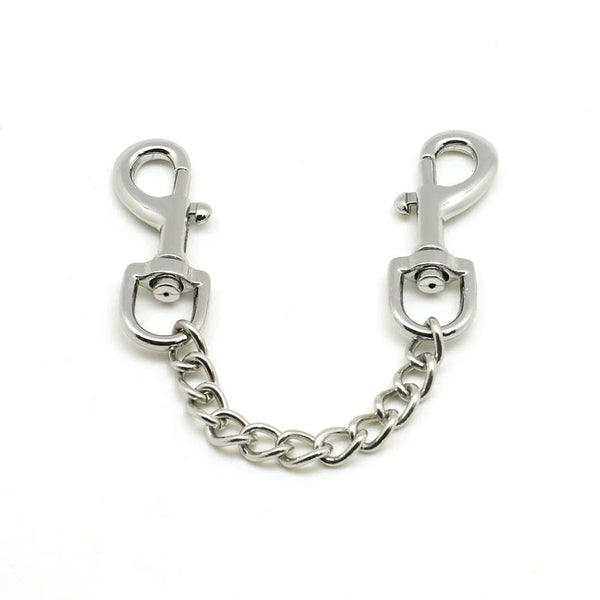
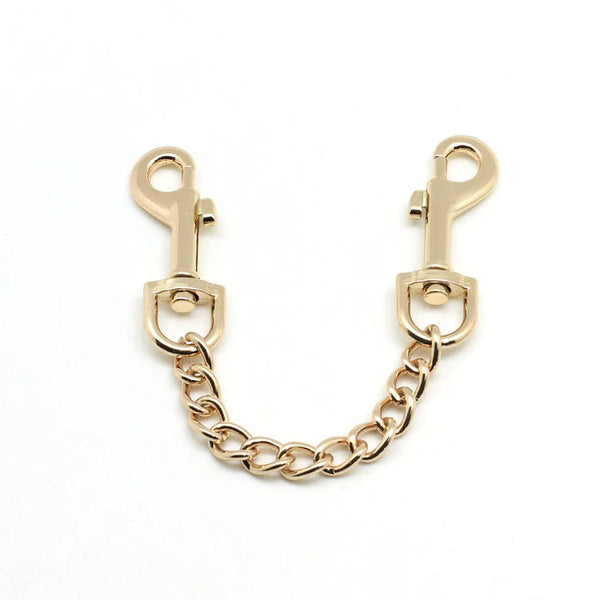
A hogtie connects a partner's wrists and ankles together behind their back, folding the body into a compact, bound shape. In practice, most modern hogties are much gentler than the name suggests: a small connector piece links soft leather cuffs at the wrists to cuffs at the ankles, and the exact tightness, angle, and position are fully adjustable.
Three things make a hogtie different from other restraint styles:
- One connection does everything. Instead of tying multiple ropes, a single center ring or connector joins all four limbs, so the scene can start in minutes and end in seconds.
- The body sets the intensity. Elbows flat and relaxed feels like a warm embrace; a deeper arch changes the scene completely. The gear stays the same, the body chooses.
- It is a visual scene. A well-made leather hogtie looks finished and deliberate, which is a large part of why couples enjoy simply looking at their restrained partner.
Is a hogtie safe for beginners?
Yes, with conditions. A floor hogtie built from padded cuffs and a short connector is one of the least risky full-body restraints, because there is no suspension, no pressure on the neck, and an instant release path: unclip one center link and the whole tie opens.
That said, a hogtie loads the shoulders, hips, and knees in ways your partner may not expect. The safe approach is simple: keep the first sessions short, keep the connecter strap loose enough that the partner can separate their hands and feet slightly, and agree that any numbness, tingling, or joint strain means an immediate release.
Never hogtie a partner who cannot comfortably lie on their front, has any shoulder or hip injury, or cannot communicate clearly while face down.
Three hogtie positions for beginners
Position one: the loose classic
The standard starting shape. Wrist cuffs and ankle cuffs connect behind the back with a leather hogtie connector, knees stay bent, and the head rests on a pillow. Keep the connecting strap at its longest setting: the partner should be able to slide their heels two or three inches away from their wrists. From here, the scene is mostly touch, voice, and patience.
Position two: the side-lying variant
For partners who find face-down breathing uncomfortable, clip the cuffs as usual, then roll the whole body onto one side. Everything stays connected, breathing is easy, and the legs can rest together. This position suits longer sessions and makes conversation natural, which makes it the best first hogtie for nervous partners.
Position three: the front connection
A gentler modern take: connect the wrist cuffs to the ankle cuffs in front of the body, over the thighs. The shape reads as a full hogtie from the rigger's view, but the partner bears almost no load on shoulders or hips. It is a perfect way to explore the aesthetic and the psychology of a hogtie before trying the classic form. Soft ankle cuffs with wide padded lining make front connections far more comfortable.
Stay at these three for as long as you like. Every advanced hogtie variation is a matter of angles and strap length built on exactly this foundation.
Hogtie safety rules that matter most
- Circulation checks on a schedule. Check the fingers and toes beyond every cuff every three to five minutes. Pink and warm is healthy; pale, cold, or tingly means loosen or release immediately.
- Never tie near the neck. A hogtie uses wrists and ankles only. Any harness, rope, or collar pressure near the throat while face down is a hard limit.
- Joints stay bent and soft. Locking elbows or knees straight while bound multiplies strain. Keep every joint relaxed, and reposition as soon as your partner starts bracing.
- Time limits are real. Twenty minutes is a sensible ceiling for early sessions. Faces get numb against pillows, shoulders fatigue quietly, and enthusiasm hides discomfort.
- Release faster than you bound. One clip opens a good connector. Practice opening it alone before the scene, and keep safety shears nearby for rope-style ties.
What makes a good hogtie set?
Look for four features before buying:
- Padded cuffs. Wide, soft lining at the wrists and ankles spreads pressure instead of concentrating it. A set like the Angel's Kiss leather hog tie with locking buckle pairs padded restraint with a lockable buckle for partners who want the commitment to feel real.
- A single quick-release connector. The center link should open in one motion with one hand, since the other hand may be busy holding your partner.
- Adjustable strap length. The connector that can shorten or lengthen lets one set serve the loose classic and the tighter variations.
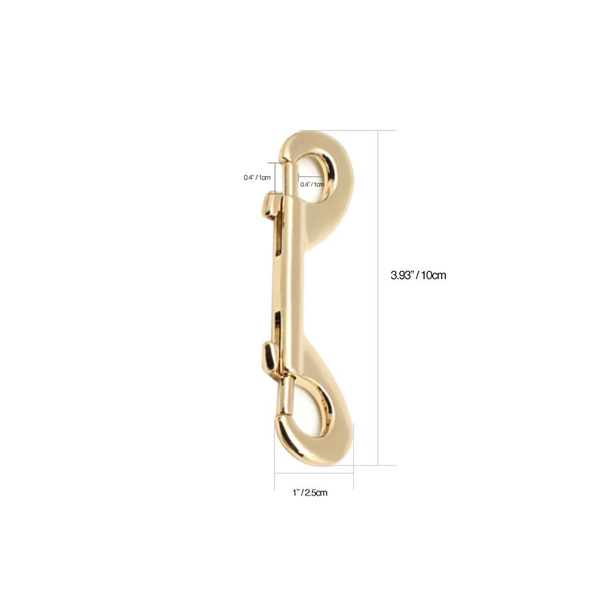
- Hardware that will not fail. Nickel-free metal clips rated for real load, stitching that runs through the strap, and leather that softens without losing strength. Handmade leather gear earns its price here, because a hogtie is exactly the kind of scene where hardware quality stops being a detail.
Vegan option: the Dark Candy vegan leather hog tie delivers the same structure in polyurethane with gold hardware for couples avoiding animal leather.
Aftercare after a hogtie
A hogtie compresses the chest slightly and loads the shoulders, so aftercare has two jobs: physical recovery and emotional landing. Unclip the connector first, then the cuffs, help your partner roll onto their side slowly, and spend a minute massaging the shoulders and hips while circulation normalizes. Water, a blanket, and an unhurried conversation about what felt best finish the scene. Ask specifically about any lingering tingling in hands or feet; it usually fades in minutes, but it tells you which cuff to pad or loosen next time.
Hogtie FAQ
What does a hogtie feel like?
Comfortable and surprisingly contained. With padded cuffs and a loose connector, the dominant sensation is not pain but helplessness mixed with deep relaxation, which is exactly the appeal for most couples.
How long can someone stay in a hogtie?
Twenty minutes is a safe maximum for beginners, with circulation checks every few minutes throughout. Experienced partners who stay comfortable and communicative extend gradually.
Can I hogtie my partner if they cannot lie face down?
Yes. Use the side-lying variant or the front connection: the cuffs and connector stay identical, only the body position changes.
What is the difference between rope and leather hogties?
Rope hogties look traditional and require knot knowledge; leather hogtie sets use buckles and clips that adjust in seconds, release instantly, and pad the limbs. For beginners, leather is faster to learn and easier to make safe.
How do I make a hogtie more intense later?
Shorten the connector strap by small increments, one setting at a time, and only after a full session at the current setting felt easy. Intensity in hogties comes from geometry, not force.
What should I do if my partner's hands go numb?
Release immediately, help them sit up, and massage the hands and wrists until sensation and warmth return fully before any repositioning. Numbness that persists is a sign to end the scene.
Build your hogtie kit with Liebe Seele
Start with a complete rope hogtie set if you want the full bound aesthetic, or the padded Black Bond leather hogtie connector with matching wrist cuffs and ankle cuffs if you prefer the classic leather build. Every piece is handmade from premium leather, because restraint this personal should be built like it matters.